


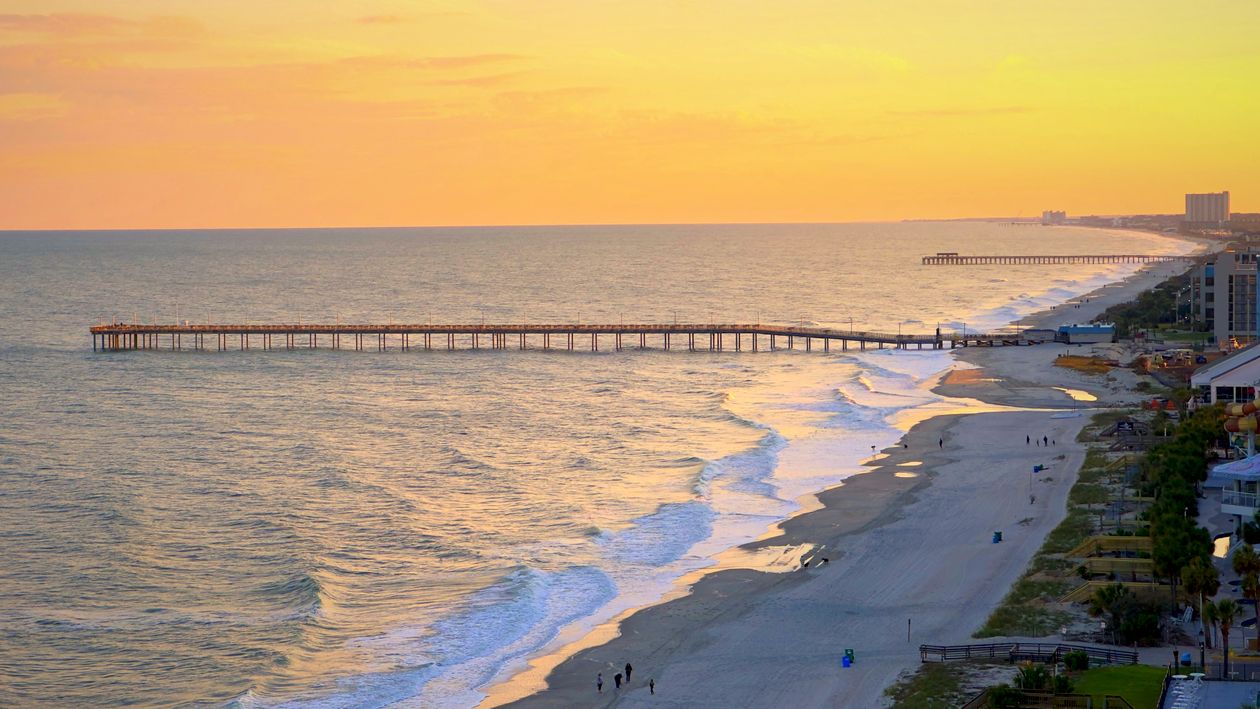
Every place has a version of itself that it shows to visitors and a version that only residents know. The Grand Strand — the 60-mile stretch of South Carolina coastline anchored by Myrtle Beach — is no different. The visitor version involves packed beaches, miniature golf, and traffic you cannot believe. The resident version is something else entirely. Here is the honest list — the things that make people who live here genuinely glad they made the move, and the things they wish someone had told them before they did.
The Best Things About Living on the Grand Strand
1. October Is Yours
When summer ends and the tourists go home something remarkable happens — the Grand Strand transforms. The beaches empty out. The restaurants stop having waits. The roads open up. The temperature settles into the mid-70s with low humidity and blue skies that seem to go on forever. Locals have a phrase for it: "We earn October." They are right. It might be the best month of weather anywhere on the East Coast and it belongs almost entirely to residents.
2. The Property Tax Bill Will Make You Laugh
Not in a cynical way. In a genuine disbelief way. South Carolina's 4% primary residence legal residence rate means a $350,000 home in Horry County generates approximately $800–$1,400 in annual property taxes. If you relocated from New Jersey, New York, Connecticut, or Massachusetts — where the same home might carry $8,000–$12,000 in annual taxes — the first bill feels like a mistake. It is not a mistake. This is just what South Carolina decided to do. See the full financial picture here.
3. No One Taxes Your Social Security Here
South Carolina does not tax Social Security income. It also provides a $15,000 deduction on other retirement income. For retirees who spent decades in high-tax states this is not a small thing. This is thousands of dollars per year — permanently. The retirees who moved here for the beach often describe the tax structure as the thing they should have moved for ten years earlier.
4. The Water Is Everywhere and You Actually Use It
The Atlantic Ocean. The Intracoastal Waterway. The Waccamaw River. Lakes and ponds throughout virtually every community. Marshes and tidal creeks woven through the landscape. People who move here expecting beach access discover a layered water lifestyle — kayaking on the ICW, fishing on the river, paddleboarding on community lakes, watching dolphin from the Murrells Inlet MarshWalk. The water is not just a backdrop. It is woven into daily life in ways that visitors never fully experience.
5. The Golf Is Genuinely Exceptional
More than 80 courses within easy driving distance. Tee times available. Rates that are genuinely affordable — especially off-season — compared to any other golf-destination market in the country. For people who golf this is not a minor lifestyle perk. It is a major reason to live here. Courses that would cost $250 in peak season at a destination resort cost $50 on a Tuesday in November. People who move here for golf describe this as living in permanent vacation mode — except they live here.
6. Brookgreen Gardens and Huntington Beach State Park
These two places are approximately 20 minutes south of Myrtle Beach and most visitors to the Grand Strand have never heard of either one. Brookgreen Gardens is one of the finest sculpture gardens and wildlife sanctuaries in the Southeast — 9,000 acres of Lowcountry heritage, formal gardens, and live oak allées. Huntington Beach State Park is consistently rated among the best state parks in the country — pristine beach, exceptional birding, and genuinely uncrowded even when the rest of the Grand Strand is packed. Locals keep both quiet on purpose.
7. The Winters Will Change Your Relationship With January
Average January high temperature: mid-50s Fahrenheit. Golf-able. Walkable. Occasionally a hard frost but snow is a novelty rather than a weather event. The first January after moving from the Northeast is a specific kind of revelation — the ability to be outside, to be on the water, to be on a golf course in the middle of a month that used to mean ice scrapers and seasonal depression. This is not a small thing. It is one of the most consistently cited quality-of-life improvements long-term residents describe.
8. Everyone Here Chose to Be Here
The transplant community of the Grand Strand has a shared characteristic that is easy to underestimate until you experience it: almost everyone made a deliberate decision to be here. They left something — a high-cost state, a brutal climate, a tax environment that felt punitive — and chose this. That shared experience of intentional relocation creates a community that is notably welcoming, connected, and happy in ways that communities built from obligation are not.
The Worst Things About Living on the Grand Strand
1. Summer Traffic Is a Genuine Test
There is no diplomatic way to say this: July and August on the Grand Strand are chaotic. The population swells by hundreds of thousands of visitors. Certain roads — Kings Highway, Ocean Boulevard, Highway 17 in the main corridor — can feel like parking lots on summer weekends. Residents learn workarounds — Highway 31, early morning errands, avoiding the beach corridor on Saturday afternoons — but the first summer is a genuine adjustment for almost everyone. This is the most commonly cited frustration among Grand Strand residents. It is also real.
2. You Will Need a Car for Everything
The Grand Strand is not walkable — except in the specific pocket of Market Common and a handful of neighborhoods. There is no meaningful public transit. Grocery store, doctor, restaurant, hardware store — everything requires driving. For people who relocated from walkable urban environments this is a real lifestyle shift that does not fully reverse. Most residents adapt and stop thinking about it. Some never fully make peace with it. Know which type you are before you move.
3. The Bugs Are a Real Thing That Requires a Plan
Coastal South Carolina has bugs. Specifically: palmetto bugs — very large cockroaches given a friendlier name — mosquitoes that are serious in warm months, and no-see-ums near marsh areas that are genuinely relentless at dusk. A quarterly pest control service — approximately $100–$150 — handles most of this effectively. But people who move here without a plan for it discover the reality of coastal insect life on their own timeline, which is not always a pleasant process.
4. Hurricane Season Is Real and Requires a Mindset
June through November. Residents develop their own relationship with storm preparedness that ranges from meticulous to philosophical. Direct hits on the Grand Strand are historically less frequent than the Florida coast but the risk is genuine and the preparation is a real annual responsibility. Flood insurance is a real expense for properties in higher-risk flood zones. Anyone moving to coastal South Carolina should understand what their specific property's flood zone is and what flood insurance will cost before they close. See our buyer guidance for 2026 for more on this.
5. Specialist Healthcare Requires Planning
Routine and urgent care on the Grand Strand is well-served and improving rapidly. Grand Strand Medical Center, Conway Medical Center, and Tidelands Health handle most needs well. For certain specialist needs — specific surgical subspecialties, rare conditions, complex oncology — the Grand Strand may require travel to Charleston or Columbia. This is improving meaningfully as the area grows but it is a genuine consideration for anyone with specific or complex medical needs evaluating whether the Grand Strand is the right fit.
6. The Summer Visitor Economy Shapes Everything
The Grand Strand economy is deeply intertwined with tourism. This creates the restaurants, the entertainment, and the amenities that residents enjoy year-round. It also means that certain decisions — road design, commercial development, event calendars — are made with the summer visitor in mind rather than the year-round resident. Most residents make peace with this trade-off because the benefits of the visitor economy far outweigh the friction. But it is worth naming.
7. You Will Need to Manage Your Expectations for the First Summer
This deserves its own entry because it is the most predictable point of friction for new residents. Almost everyone who moves here and loves it will tell you that their first summer was the moment they wondered if they made a mistake — and that they were wrong to wonder. The pattern is consistent enough that it is worth stating directly: if you move here and your first summer is hard, you are having a normal experience. Wait for October. Almost no one regrets it after October.
The Verdict
The Grand Strand is not a perfect place to live. The best places never are. But the honest accounting — the best things against the worst things — comes out strongly positive for the specific type of person who chooses to be here. The tax structure is real. The winters are real. The community is real. The water is real. The summers and the bugs and the car dependency are also real. For the right buyer the bests outweigh the worsts by a margin that makes the decision easy in retrospect — even when it felt uncertain in the moment.
FAQ
What is the best thing about living in Myrtle Beach?
Long-term residents most consistently cite the off-season — particularly October and November — and the financial advantages of South Carolina's tax structure as the things they would never trade away.
What is the worst thing about living in Myrtle Beach?
Summer traffic and crowding is the most consistent answer. Car dependency is second. Both are manageable with local knowledge and community adjustment but both are real.
Is the Grand Strand worth living on year-round?
The overwhelming consensus among long-term residents is yes — with honest acknowledgment of the summer season as a test that most people pass. The off-season quality of life is described as genuinely exceptional.
How do people survive summer in Myrtle Beach as a resident?
By learning the road geography — specifically Highway 31 — running errands early, building a social life that does not depend on the tourist corridor, and reminding themselves that October is coming. Most residents describe it as an annual pattern they have built into their lives rather than something they actively suffer through.
Is Myrtle Beach affordable to live in year-round?
Yes — see the full breakdown at our cost of living guide. The combination of low property taxes, no Social Security tax, and home prices well below comparable coastal markets makes the financial case consistently strong for buyers coming from high-cost states.
What is the best neighborhood to live in on the Grand Strand?
It depends entirely on your lifestyle and budget. See the full neighborhood guide and the suburbs guide for a complete breakdown.