New - 15 Mins Ago

$1,399,900
Active
4
Beds
5
Baths
6255
Sqft
1.59
Acres
5012 Wynfield Ct, Myrtle Beach, SC 29577
MLS#: 2625387


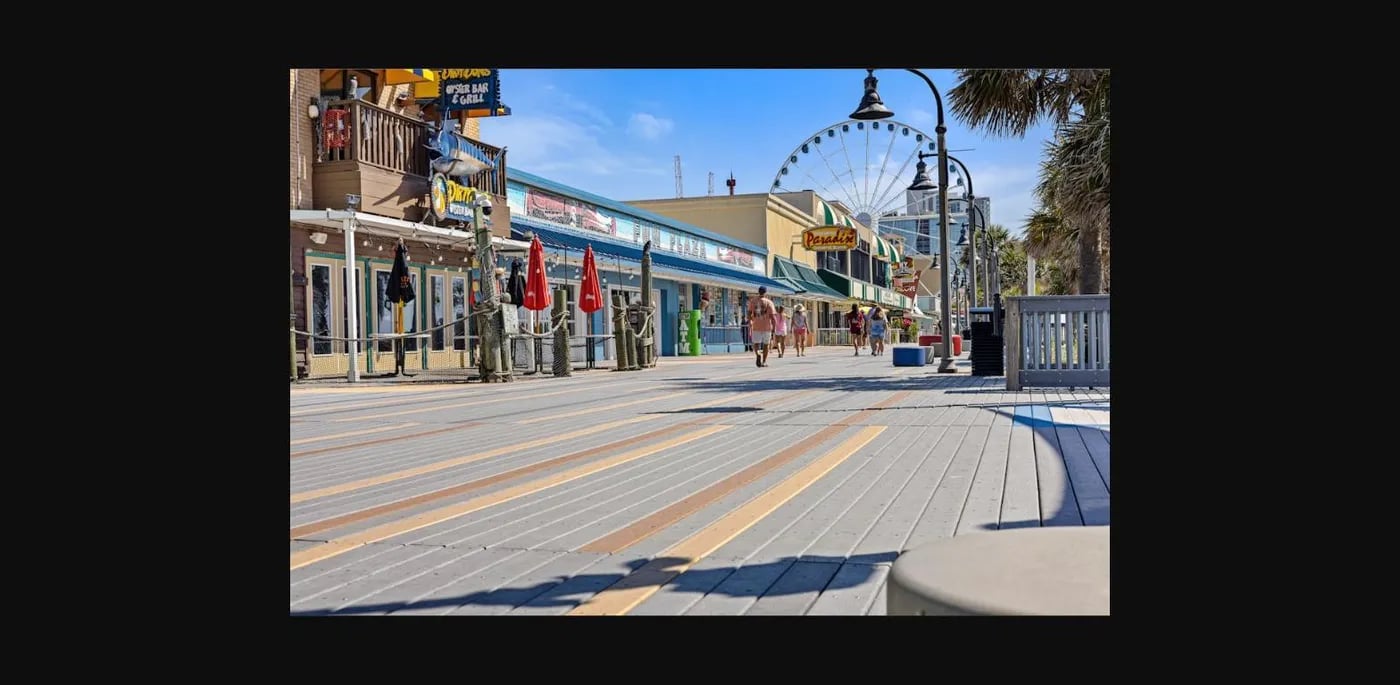
Yes — and significantly more affordable than most comparable coastal markets. Myrtle Beach consistently ranks among the most affordable coastal cities on the East Coast. If you're weighing a move to the Grand Strand or simply trying to understand what your dollar actually buys here, this guide breaks down every major cost category for 2026, with real numbers you can plan around.
Here is exactly what it costs to live here in 2026, broken down category by category — housing, taxes, utilities, groceries, healthcare, and transportation — plus a direct comparison to other coastal markets and a real-world lifestyle budget at the end.
The Secure Home Finder Team at Homes Myrtle works with buyers relocating from across the country, and we see firsthand how far a dollar stretches here compared to the Northeast, Mid-Atlantic, and even parts of Florida. What you'll find below is the honest, data-backed picture.
Housing is the biggest cost driver for most households, and it's where Myrtle Beach delivers its most dramatic advantage over comparable coastal markets.
Across the Grand Strand, the median single-family home price ranges from $300,000 to $360,000 as of 2026. Entry-level new construction in communities like Conway and Longs starts in the mid-$200s, making homeownership accessible for first-time buyers who would be priced out of comparable coastal markets. Townhomes run $220,000–$320,000, while condos vary widely from $150,000 for inland units to $500,000 or more for oceanfront properties. Luxury waterfront homes and estates range from $500,000 to $2 million or higher.
To put this in perspective, the same $330,000 budget that buys roughly 1,100 square feet in northern New Jersey or a small condo in the New York metro area purchases a 2,000+ square foot home in an amenity-rich community in Myrtle Beach. You are not just getting more square footage — you're getting resort-style pools, fitness centers, walking trails, and often golf course access.
For buyers planning to finance, a monthly mortgage on a $320,000 purchase with 10% down at current market rates runs approximately $2,000–$2,200 per month PITI (principal, interest, taxes, and insurance included). That number would be impossible to achieve for a comparable property in most East Coast coastal markets.
Ready to see what's available? Search Homes Myrtle Beach or connect with the Secure Home Finder Team to discuss your budget and target neighborhoods.
South Carolina's property tax structure is one of the most favorable in the nation for primary residents, and it is a major driver of the state's appeal to relocating families and retirees alike.
Primary residences in South Carolina are assessed at a 4% rate — one of the lowest in the country. On a $350,000 primary residence home, you can expect to pay an effective annual property tax of approximately $800–$1,400 depending on the specific municipality and applicable millage rates. The variance is narrow. This is not a typo.
For comparison: in New Jersey, a $350,000 home typically carries property taxes of $7,000–$10,000 per year. In New York, the same value runs $6,000–$9,000 or more annually. Even Florida, which enjoys no income tax, averages approximately $3,500–$4,500 per year at that price point.
For residents aged 65 and older, South Carolina's Homestead Exemption provides an additional $50,000 reduction in the assessed value of the home, further lowering the tax burden. For retirees on fixed income, this combination of low assessment rates and homestead protection is genuinely transformative for monthly cash flow.
For current tax rates and assessment information, visit the Horry County SC official website. You can also browse current Myrtle Beach listings to understand how property values translate into real tax bills in different neighborhoods.
South Carolina's income tax environment is particularly compelling for retirees and for households with retirement income, but the advantages extend to working professionals as well.
The most significant benefit for retirees is that Social Security income is not taxed at the state level. Additionally, South Carolina provides a $15,000 retirement income deduction that applies to pensions, 401(k) distributions, and IRA withdrawals. For a retired couple drawing $60,000 per year in retirement income, this deduction alone can save thousands annually in state taxes.
The maximum state income tax rate in South Carolina is 6.4%, which is highly competitive compared to neighboring and comparison states: New Jersey tops out at 10.75%, New York at 10.9%, and California at 13.3%. There is also no estate tax and no inheritance tax in South Carolina, which matters considerably for wealth transfer planning.
For complete details on South Carolina's income tax rules, retirement deductions, and eligibility, visit the South Carolina Department of Revenue at dor.sc.gov.
Utilities in coastal South Carolina reflect the subtropical climate — mild winters keep heating costs low, but summer air conditioning runs hard and long, and that's where most households feel the pinch.
Average monthly utilities for a 2-bedroom home run approximately $220–$380 per month depending on the season, home size, and insulation quality. Budget toward the higher end for June through September, when AC usage peaks. Most Myrtle Beach area homes use electric heat pump systems rather than natural gas — natural gas infrastructure is limited along much of the coastal SC strip — so your utility bill will be an all-electric picture.
Internet service runs $60–$100 per month with competitive options from major providers. Water and sewer costs vary by community; many HOA-governed neighborhoods include some utility services within their monthly dues, which can offset costs for homeowners in those communities.
Grocery costs in the Myrtle Beach area run approximately 3–5% below the national average, a modest but real benefit when multiplied across a year of household shopping. Major chains serving the area include Harris Teeter, Publix, Walmart, Aldi, and Lowes Foods, giving residents a full range of price points from budget to premium.
One genuine lifestyle perk that new residents consistently appreciate is access to fresh local seafood at prices well below what inland markets charge for equivalent frozen products. Fresh local shrimp, fish, and blue crab are available through local seafood markets and, in season, directly from docks and boat sales. It is a quality-of-life advantage that coastal living provides that simply doesn't show up in cost indices.
Dining out ranges from $12–$18 per person at casual restaurants to $40–$80 per person at fine dining establishments. The MarshWalk in Murrells Inlet — located about 20 minutes south of the Myrtle Beach core — is particularly well-regarded for exceptional waterfront seafood dining at mid-range prices. It's a place that makes the cost-of-living picture feel like more than just a spreadsheet.
Healthcare costs in the Myrtle Beach area run approximately 4–7% below the national average, which is meaningful for retirees who rely heavily on medical services and for families budgeting for long-term healthcare spending.
Major healthcare providers serving the Grand Strand include Grand Strand Medical Center in Myrtle Beach, Conway Medical Center, McLeod Health Loris, and Tidelands Health across multiple locations. The specialist population has grown significantly as the Grand Strand's permanent resident base has expanded, reducing the need to travel to Columbia or Charlotte for specialty care that was once unavailable locally.
Medicare supplement plans are widely available and competitively priced in South Carolina, which is a significant factor for retirees comparing states. For more information on Grand Strand healthcare resources, visit Grand Strand Medical Center at grandstrandmed.com.
If you're planning a retirement move and healthcare access is a priority in your decision, the Secure Home Finder Team can help you identify neighborhoods that are positioned conveniently relative to major medical facilities. Talk to our team to get the full picture.
Myrtle Beach is car-dependent — there is no significant public transit system, and most residents budget for two vehicles. That said, the cost advantages in transportation largely offset this reality.
Gas prices in the Myrtle Beach area typically run $0.10–$0.20 below the national average, providing modest but consistent savings for households with longer commutes or two-vehicle needs. There are no tolls on major routes in the area, which is a contrast to commuters accustomed to Northeast toll corridors.
Myrtle Beach International Airport (MYR) has expanded significantly in recent years and now offers direct routes to major Northeast and Midwest cities via Delta, American, United, Allegiant, and Breeze airlines. For residents with family or business ties to the Northeast, this growing route network meaningfully reduces the friction of coastal living.
The Grand Strand's communities are close together, which keeps daily driving manageable: Conway is approximately 20 minutes from the beach; North Myrtle Beach is about 20 minutes north; and Pawleys Island is roughly 30 minutes to the south. For buyers who want quiet community living within easy reach of the beach and amenities, this geography is genuinely attractive.
Understanding Myrtle Beach's cost position is best done in direct comparison to the markets where most of our buyers are relocating from.
| Comparison | Result | Key Driver |
|---|---|---|
| MB vs. Hilton Head SC | MB Wins | Myrtle Beach home prices run 40–50% lower than Hilton Head for comparable properties. The lifestyle amenities are different — Hilton Head skews upscale resort — but MB delivers comparable coastal living at dramatically lower cost. |
| MB vs. Outer Banks NC | MB Wins | The lifestyle is comparable, but Myrtle Beach has far superior year-round infrastructure — hospitals, restaurants, retail, and services — and better access by air and major highway. |
| MB vs. Destin/Panama City FL | MB Wins | Home prices are similar in some submarkets, but South Carolina's retirement income tax treatment — particularly the $15,000 deduction and no Social Security tax — gives SC a meaningful edge for retirees over Florida. |
| MB vs. Virginia Beach VA | MB Wins | Property taxes in SC run well below Virginia rates, and SC's retirement income tax advantages are considerably more generous than Virginia's structure. |
| MB vs. Long Island / Jersey Shore NJ | MB Wins Decisively | Myrtle Beach wins on every financial metric: home prices, property taxes, income taxes, utility costs, and overall monthly cost of living. The gap is measured in thousands of dollars per month, not hundreds. |
For buyers currently renting or owning in the Northeast, the financial case for making the move to the Grand Strand is often compelling enough to trigger the decision entirely on its own. To understand what your current home equity would buy in Myrtle Beach, get a free home valuation from Homes Myrtle.
Putting it all together in a real-world monthly budget, here is what comfortable living looks like in Myrtle Beach SC in 2026:
A single person living a full comfortable lifestyle — including housing (rent or mortgage), food, transportation, entertainment, and healthcare — can expect to spend approximately $3,200–$4,500 per month all-in. This includes dining out regularly, gym membership, travel budget, and discretionary spending.
A couple living a comfortable retirement — with owned housing, healthcare costs, food, transportation, entertainment, and travel — can expect total monthly costs of approximately $4,500–$6,500 per month all-in.
For context, equivalent lifestyle costs in New Jersey, New York, or coastal Florida commonly run $6,000–$9,000 or more per month — and that's before accounting for the higher tax burden those states impose on retirement income.
The delta is not marginal. For many retirees and relocating professionals, the move to Myrtle Beach represents a genuine and lasting improvement in financial quality of life — one that compounds over time.
If you're planning a move to Myrtle Beach or the Grand Strand, the Secure Home Finder Team at Homes Myrtle is here to help you find the right home in the right neighborhood at the right price. We work across all price points from entry-level new construction to luxury waterfront. See our related guides: Retiring to Myrtle Beach SC, Moving to Myrtle Beach, and Pros and Cons of Living in Myrtle Beach SC.
Myrtle Beach is significantly more affordable than most comparable coastal markets in the United States. The median home price ranges from $300,000–$360,000 across the Grand Strand, property taxes on a primary residence of $350,000 run approximately $800–$1,400 per year, and grocery and healthcare costs both run below the national average. A single person can live a full, comfortable lifestyle for $3,200–$4,500 per month all-in, and a retired couple can sustain a comfortable quality of life for $4,500–$6,500 per month.
A household income of approximately $55,000–$70,000 per year supports a comfortable single-person lifestyle in Myrtle Beach, including owning or renting a home, owning a vehicle, covering healthcare, and maintaining discretionary spending. For a couple, a combined income or retirement income of $80,000–$100,000 per year supports a comfortable lifestyle with owned housing, regular dining out, and travel. These figures compare favorably to coastal markets in New Jersey, New York, and coastal California, where comparable lifestyle costs often require incomes of $120,000–$180,000 or higher.
South Carolina assesses primary residence properties at a 4% rate — one of the lowest in the country. On a $350,000 primary home, the effective annual property tax is typically $800–$1,400 depending on the municipality and applicable millage rate. Secondary homes and investment properties are assessed at 6%, which results in a higher tax bill. Residents 65 and older qualify for the Homestead Exemption, which reduces the assessed value by an additional $50,000. For current tax information, visit horrycountysc.gov.
In terms of pure home prices, Myrtle Beach and coastal Florida markets like Destin and Panama City are broadly comparable. However, South Carolina holds a meaningful advantage for retirees: SC does not tax Social Security income, provides a $15,000 retirement income deduction for pensions and IRA distributions, and its maximum income tax rate of 6.4% applies to a narrower base than many people expect. Florida has no income tax, but SC's retirement income exclusions often result in similar or lower effective tax burdens for retirees. When you combine home prices, property taxes, and income tax treatment holistically, Myrtle Beach and coastal SC typically compare favorably to Florida for retiree households. You can also review our complete retiring to Myrtle Beach guide for a full comparison.
Average rent in the Myrtle Beach area as of 2026 runs approximately $1,200–$1,600 per month for a one-bedroom apartment and $1,600–$2,200 per month for a two-bedroom unit, depending on location, amenities, and proximity to the beach. Oceanfront and resort-area rentals skew higher, while inland communities offer lower rates. Many long-term residents find that buying is more cost-effective than renting within 2–3 years of arriving, particularly given SC's favorable property tax environment. The Secure Home Finder Team at Homes Myrtle can help you evaluate the rent-vs-buy equation for your specific situation — contact us here.


