Open: Sat 11:00 AM - 1:00 PM

$215,900
Active
2
Beds
2
Baths
1050
Sqft
--
Acres
4773 Wild Iris Dr #5-202, Myrtle Beach, SC 29577
MLS#: 2624417


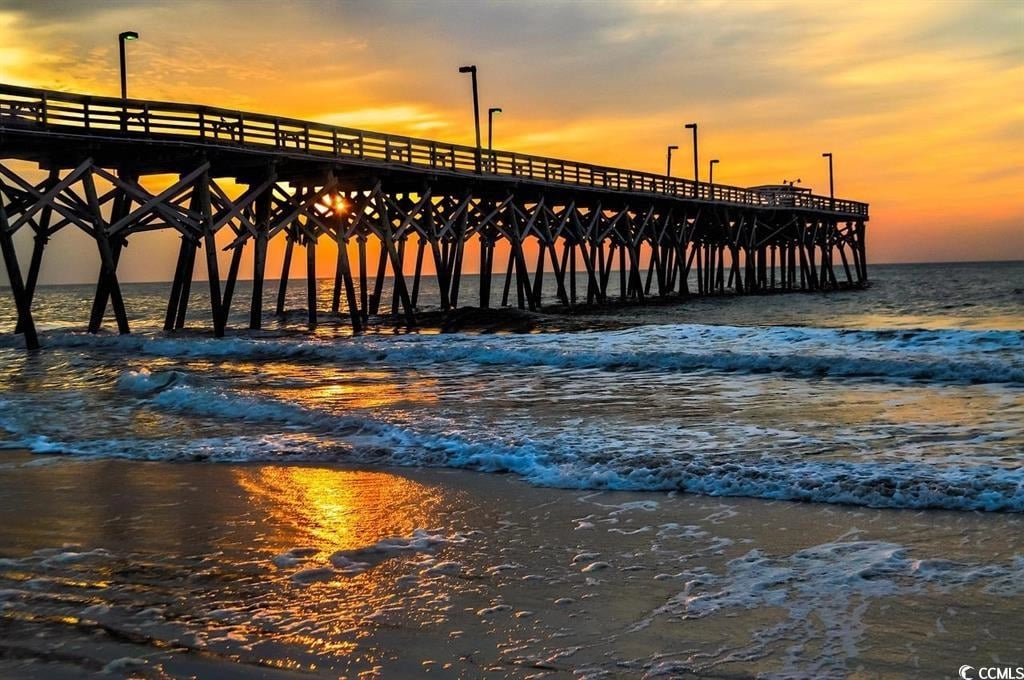
Myrtle Beach SC has become one of the most popular retirement destinations in the entire United States — and it is not hard to understand why. No state income tax on Social Security. No state income tax on most retirement income. Year-round sunshine. A 60-mile stretch of Atlantic Ocean coastline. World-class golf. Affordable cost of living. And a healthcare infrastructure that has grown dramatically over the past decade to serve one of the fastest-growing retirement populations on the East Coast. Thousands of retirees move to the Grand Strand every year from the northeast, midwest, and mid-Atlantic — trading cold winters, high taxes, and high costs for a coastal lifestyle that genuinely delivers more for less. Here is everything you need to know about retiring to Myrtle Beach SC in 2026.
Myrtle Beach consistently ranks among the top retirement destinations in the US because of its combination of low taxes, affordable cost of living, warm weather, and outdoor lifestyle — at a price point that Florida, Arizona, and the Carolinas' mountain communities cannot match simultaneously.
Myrtle Beach is not competing with retirement communities — it is competing with entire states. Florida has the sunshine and the no-income-tax advantage but the property insurance crisis, hurricane exposure, and affordability collapse in major metros have pushed many retirement-age buyers to look elsewhere. Arizona has the warmth but lacks the coastal character and water access that many retirees specifically want. The Grand Strand delivers coastal lifestyle, low taxes, affordability, and four genuine seasons — with summers that are warm and winters that are mild rather than brutal — at price points per square foot that most retirees find genuinely surprising when they first look.
The other factor that drives consistent retirement migration to Myrtle Beach is the existing retiree community. The Grand Strand has an exceptionally large and active retirement-age population — organized golf leagues, pickleball clubs, social groups, volunteer organizations, and active adult communities create a social infrastructure that makes arriving as a new retiree meaningfully easier than arriving in a place where you are building from scratch.
South Carolina is one of the most tax-friendly states in the country for retirees — Social Security is not taxed, up to $15,000 per person of retirement income is deductible, and the 4% primary residence property tax rate is among the lowest in the Southeast.
Social Security: South Carolina does not tax Social Security income. Full stop.
Retirement income deduction: South Carolina allows each taxpayer to deduct up to $15,000 of retirement income — including pension income, IRA distributions, and 401k withdrawals — from state taxable income. For a married couple that is $30,000 of combined retirement income that escapes state taxation entirely.
Property taxes: The 4% legal residence rate for primary homeowners is the key number. On a $400,000 home the assessed value at 4% is $16,000 — and with Horry County's millage rate the annual property tax bill runs approximately $500 to $900 for most primary residences. That is not a typo. Property taxes on a $400,000 primary residence in Horry County routinely run under $1,000 per year. Buyers relocating from New Jersey, New York, Connecticut, Illinois, or Massachusetts consistently describe their first Horry County tax bill as the moment retirement in Myrtle Beach became real.
No estate tax: South Carolina has no estate or inheritance tax.
Sales tax: South Carolina's base sales tax is 6% with a 1% Horry County local option tax — 7% total on most purchases. Groceries are exempt from state sales tax.
For the full cost of living breakdown see our Myrtle Beach cost of living guide.
The cost of living in Myrtle Beach runs approximately 8 to 12% below the national average — driven primarily by low housing costs, low property taxes, and the absence of state income tax on most retirement income.
Housing: The median home price in the Myrtle Beach area runs approximately $300,000 to $320,000 — well below the national median for coastal markets. Retirement-appropriate single-family homes in established communities like Carolina Forest, Conway, and Surfside Beach are readily available from $270,000 to $450,000. Active adult communities like Del Webb at Lakewood Ranch and Cresswind at Market Common deliver resort-style amenities at price points that comparable communities in Florida and Arizona cannot touch.
Utilities: Coastal South Carolina's mild winters reduce heating costs significantly compared to northern states. Average monthly utility bills for a 2,000 square foot home run approximately $150 to $220 — lower than national averages for comparable square footage.
Healthcare: Horry County has seen significant healthcare infrastructure investment over the past decade. Hospital costs and insurance premiums in the Myrtle Beach market are generally below national averages. Medicare Advantage plan options in the area have expanded significantly as the retirement population has grown.
Groceries and dining: Grocery costs are generally at or slightly below national averages. The restaurant scene on the Grand Strand covers every price point — from $8 casual seafood to $80 fine dining — and the seafood quality and freshness at accessible price points is a specific quality-of-life feature that retirees from inland states consistently cite as one of the most enjoyable aspects of daily life in Myrtle Beach.
The best retirement communities in Myrtle Beach range from 55-plus active adult developments to resort-style master-planned communities — with options at every price point from $250,000 to $1,500,000-plus.
Del Webb North Myrtle Beach is the most prominent purpose-built 55-plus active adult community on the Grand Strand — a DiVosta/Pulte development in the Windy Hill section of North Myrtle Beach featuring resort-style amenities including a clubhouse with indoor and outdoor pools, fitness center, tennis courts, pickleball courts, and a full-time activities director. Low-maintenance villa and single-family home designs from the $300,000s. The Del Webb lifestyle program creates the most organized social calendar of any retirement community in the area. See Del Webb North Myrtle Beach homes for sale.
Cresswind at Market Common is a Kolter Homes 55-plus active adult community embedded within the Market Common lifestyle district — giving residents walking and biking access to the Market Common's restaurants, retail, cinema, and greenspace. Resort-style amenities, low-maintenance homes, and the walkable urban lifestyle that active adult buyers specifically seek. See Cresswind at Market Common homes. For the full Market Common guide see our Market Common Myrtle Beach complete guide.
Carolina Forest is the most popular non-age-restricted area for retirees seeking resort amenity communities at accessible price points. Communities like Berkshire Forest, The Parks at Carolina Forest, and The Farm deliver resort pools, fitness centers, pickleball courts, and active social calendars at prices from $280,000 — without the 55-plus restriction that limits resale flexibility. Many Carolina Forest communities actively program activities for retirement-age residents. See our complete Carolina Forest neighborhoods guide.
Grande Dunes is Myrtle Beach's premier luxury retirement address — a 2,200-acre master-planned community with a private oceanfront Ocean Club, marina, championship golf, and resort amenities. Del Webb Grande Dunes is the 55-plus section within the community delivering active adult lifestyle at the luxury tier. See Grande Dunes homes. For the full guide see our Grande Dunes homes for sale guide.
Murrells Inlet and Pawleys Island attract retirees who want a quieter coastal lifestyle — away from the tourist activity of Myrtle Beach proper but with full access to the Grand Strand amenity infrastructure. The Murrells Inlet MarshWalk, Brookgreen Gardens, and Huntington Beach State Park create a daily lifestyle that retirees from busy northeastern metros consistently describe as exactly what they were looking for. Explore Murrells Inlet homes and Pawleys Island homes.
Myrtle Beach has three major hospital systems — Grand Strand Medical Center, Conway Medical Center, and Tidelands Health — plus dozens of specialty practices, urgent care centers, and outpatient facilities serving the Grand Strand's large retirement population.
Grand Strand Medical Center — the region's primary acute care facility located in the heart of Myrtle Beach. Level II trauma center with cardiology, oncology, orthopedics, and neurology specialty services. Recently expanded with significant capital investment in response to the growing retirement population.
Conway Medical Center — a highly regarded community hospital in Conway serving the inland corridor. Consistently recognized for patient satisfaction. Primary care, cardiology, and surgical services.
Tidelands Health — a network of hospitals and outpatient facilities across Horry and Georgetown counties including facilities in Murrells Inlet, Pawleys Island, and Georgetown. Particularly strong for retirees in the south strand corridor.
Medicare Advantage: Multiple Medicare Advantage plans operate in Horry County — the expansion of plan options in the past several years reflects the growing retirement population. Confirm current plan availability and network coverage for any specific plan before relocating — provider networks in Horry County have expanded but may differ from what retirees are accustomed to in larger metro markets.
Specialist access: The Grand Strand has seen significant specialist growth — cardiology, orthopedics, and oncology are well-represented. For highly specialized tertiary care — complex cancer treatment, advanced cardiac surgery — Medical University of South Carolina in Charleston is approximately 90 minutes south. This is the relevant trade-off for retirees comparing Myrtle Beach to major metro markets with academic medical centers.
Myrtle Beach has a subtropical climate with hot humid summers, mild winters, and a genuinely long outdoor season — approximately 215 sunny days per year and average January temperatures around 50°F daytime.
Spring (March–May): The best season for many retirees — warm days, cool nights, no humidity yet, the Grand Strand at its most beautiful. Golf season peaks. Beach season begins in earnest by May.
Summer (June–September): Hot and humid — daytime highs regularly reaching 88°F to 92°F with heat indices higher. Ocean temperatures in the mid-80s make beach time genuinely enjoyable. The tourist season peaks in July and August — retirees who value quiet adjust their outdoor schedules accordingly. Air conditioning is not optional in summer.
Fall (October–November): Many retirees cite this as their favorite season — warm ocean water, fewer tourists, comfortable temperatures, and the Grand Strand's natural beauty at its peak. October highs in the low 70s. Golf season resumes full swing.
Winter (December–February): Mild by most standards — average January high of approximately 53°F with lows in the 30s. Cold snaps occur but sustained freezes are rare. Snow is a once-every-several-years event. Retirees from the northeast and midwest consistently describe Myrtle Beach winters as manageable at worst and surprisingly pleasant at best.
Hurricane season: June through November is the Atlantic hurricane season. The Grand Strand has seen direct hits historically — Hugo in 1989 being the most significant. Modern building codes and storm preparedness infrastructure have improved significantly. Flood insurance considerations are relevant for coastal and low-lying properties. Most years the hurricane impact is limited to tropical storm conditions rather than direct major hurricane strikes. Learn more at FloodSmart.gov.
Myrtle Beach offers one of the most activity-rich retirement environments on the East Coast — over 100 golf courses within a 30-minute drive, 60 miles of beach, world-class fishing, the Murrells Inlet MarshWalk, Brookgreen Gardens, and a year-round calendar of arts, entertainment, and community events.
Golf: Over 100 golf courses within the Grand Strand corridor — ranging from $30 public daily fee courses to $200 private club rounds. The Grand Strand attracts over 1 million rounds of golf annually. For retirees who play 2 to 4 times per week the concentration of course options is unmatched by any coastal retirement market in the country.
Pickleball: The fastest-growing sport on the Grand Strand — dedicated pickleball facilities at most resort communities, public courts throughout Horry County, and organized leagues at every skill level. Nearly every new retirement community in the area includes pickleball as a primary amenity.
Beach and water: 60 miles of Atlantic Ocean beach with public access points throughout the corridor. Fishing — surf, pier, inshore, and offshore — is a year-round lifestyle activity. Kayaking, paddleboarding, and boating on the ICW.
Arts and culture: Brookgreen Gardens in Pawleys Island — one of the finest outdoor sculpture gardens in the world. The Alabama Theatre and House of Blues at Barefoot Landing. The Franklin G. Burroughs-Simeon B. Chapin Art Museum. The Carolina Opry. Live entertainment throughout the Grand Strand year-round. Visit MyrtleBeachSC.com for events.
Volunteering: The Grand Strand has an active volunteer community — Habitat for Humanity, Waccamaw Land Trust, Grand Strand Humane Society, Coastal Carolina University partnerships, and dozens of community organizations with strong retiree volunteer bases.
Dining: The Grand Strand restaurant scene has matured significantly — fresh local seafood at accessible price points, a growing farm-to-table dining culture, and dining options from casual to fine across every neighborhood.
The primary pros are low taxes, affordable housing, warm weather, outdoor lifestyle, and a large active retiree community. The primary cons are summer heat and humidity, tourist season congestion, hurricane risk, and limited specialist healthcare compared to major metro markets.
Pros:
Cons:
The most effective approach is to visit during shoulder season — October or March — spend at least a week experiencing daily life, tour 3 to 5 communities, and work with a local agent who specifically understands the retirement buyer profile and the communities that serve it best.
Step 1 — Narrow your priorities before you visit. Are you a golfer who wants course access? A beach person who wants walkable ocean proximity? A social person who wants a community with organized activities? A low-maintenance buyer who wants HOA-covered yard care? Defining your top 3 priorities before searching eliminates 80% of the options immediately and makes the visit far more productive.
Step 2 — Visit during shoulder season. October and March give you the most accurate picture of daily Myrtle Beach life — the weather is representative of what you will experience most of the year, the tourist congestion is gone, and the community social calendars are active.
Step 3 — Get pre-approved before you search seriously. The Myrtle Beach retirement market moves faster than most buyers expect — particularly in the $300,000 to $500,000 range. Pre-approval protects you from losing the right property while paperwork catches up. Get pre-approved here.
Step 4 — Tour communities with a retirement-specific lens. Ask specifically about HOA fee structures, amenity usage patterns, age demographics, social programming, and short-term rental policies. These details matter far more for retirement lifestyle than they do for a primary family residence purchase.
Step 5 — Search current Grand Strand listings. Search all active listings. Del Webb North Myrtle Beach listings. Cresswind at Market Common listings.
Yes — Myrtle Beach consistently ranks among the top retirement destinations in the US because of its combination of low taxes on retirement income, affordable housing, warm weather, outdoor lifestyle, over 100 golf courses, 60 miles of beach, and a large established retiree community. The primary trade-offs are summer heat and humidity, tourist season congestion, and limited specialist healthcare compared to major metro markets.
South Carolina does not tax Social Security income. Each taxpayer can deduct up to $15,000 of retirement income — including pension, IRA, and 401k distributions — from state taxable income. For a married couple that is $30,000 of combined retirement income excluded from state tax. Property taxes on primary residences in Horry County typically run under $1,000 annually on homes valued at $400,000. See the South Carolina Department of Revenue and Horry County for official tax information.
It depends on your priorities. For 55-plus active adult lifestyle Del Webb North Myrtle Beach is the most organized and amenity-rich option. For walkable urban lifestyle in a 55-plus community Cresswind at Market Common is the top choice. For resort amenities without age restrictions Carolina Forest communities like Berkshire Forest and The Parks are consistently popular with retirees. For luxury retirement Grande Dunes delivers the most complete package on the Grand Strand.
A comfortable retirement lifestyle in Myrtle Beach is achievable on a combined household income of $50,000 to $70,000 annually — covering housing, utilities, healthcare, food, transportation, and leisure for a couple in a modest to mid-range home. Retirees who own their home outright and live on Social Security plus modest investment income consistently describe their Myrtle Beach lifestyle as the most financially comfortable of their adult lives compared to higher cost-of-living states.
Myrtle Beach has three major hospital systems — Grand Strand Medical Center, Conway Medical Center, and Tidelands Health — plus expanded specialist practices across cardiology, orthopedics, and oncology. Healthcare infrastructure has grown significantly in response to the rapidly expanding retirement population. For complex tertiary care the Medical University of South Carolina in Charleston is approximately 90 minutes south.
Myrtle Beach has approximately 215 sunny days per year with average January highs around 53°F and average July highs around 90°F. Winters are mild compared to the northeast and midwest — cold snaps occur but sustained freezing temperatures are rare and snow is infrequent. Summers are hot and humid — outdoor activity is best planned for morning and evening hours from June through September.


