
$242,500
Active
2
Beds
2
Baths
996
Sqft
--
Acres
5905 S Kings Hwy #516 A, Surfside Beach, SC 29575
MLS#: 2619480


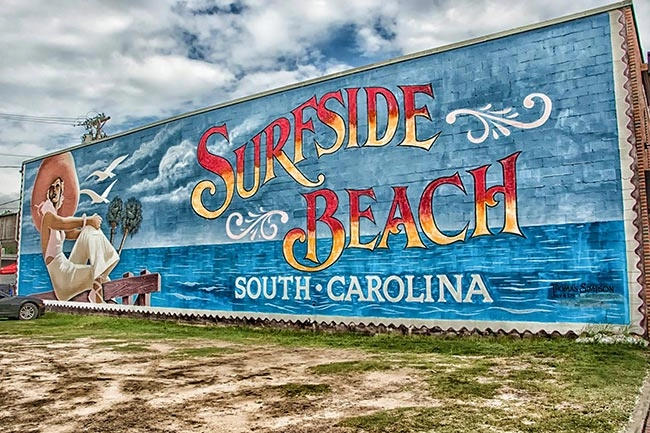
Surfside Beach, SC sits right on the Atlantic Ocean, tucked just south of Myrtle Beach and north of Garden City. It calls itself "The Family Beach," and anyone who has spent time here understands why. Wide stretches of sand, a classic wooden pier, golf carts rolling down oak-lined streets, and neighbors who actually know each other by name — this is a different kind of beach town.
But is Surfside Beach a good place to live? Like any coastal community, it comes with real trade-offs. Whether you are a young family chasing a slower pace, a retiree drawn to year-round beach access, or a remote worker who wants sand between their toes on a Tuesday, this guide lays out the honest pros and cons. The Homes Myrtle Team works this market every day, so consider this your local insider's briefing.
Surfside Beach has held the "Family Beach" title for decades, and the town works hard to earn it year after year. You will not find loud entertainment strips or high-rise casino-resort towers here. What you will find is a calm, well-maintained shoreline where kids can dig in the sand and parents can actually relax. The vibe is intentionally unhurried, and local ordinances keep commercial development from overwhelming the residential character of the community.
Surfside Beach is one of the most genuinely golf-cart-friendly towns on the entire Grand Strand. The town permits licensed golf carts on many of its streets, and residents take full advantage. A morning trip to the beach, an evening run to a local restaurant, or a quick errand to the grocery store — all of it is doable without ever starting a car. If walkability and low-key transport options matter to you, this is one of Surfside Beach's most underrated advantages.
With roughly 37 public beach access points along its approximately 3-mile oceanfront, Surfside Beach makes getting to the ocean genuinely easy. Most residential streets either dead-end at the beach or sit within a short walk of a public access path. Compare that to communities where you drive to a crowded parking lot and hike past dunes — Surfside Beach keeps it simple. See the full section on beach access below for details.
Myrtle Beach has its appeal, but the sheer volume of traffic, tourists, and commercial development is not for everyone. Surfside Beach sits just minutes away yet feels like an entirely different world. The pace is slower, the crowds are thinner outside of peak summer weeks, and the dominant sound is usually waves and seagulls rather than car horns and amusement park rides. If you want the Grand Strand lifestyle without the Grand Strand chaos, Surfside Beach often fits the bill. For a full comparison, see our piece on the pros and cons of living in Myrtle Beach, SC.
Ask anyone who has lived in Surfside Beach for more than a season and they will likely mention the neighbors. This is a town where people know each other, where local events draw real crowds, and where the civic association actually does things. The Surfside Beach Pier serves as a social gathering point, and community events throughout the year reinforce a sense of belonging that can be hard to find in larger coastal resort towns.
Surfside Beach punches above its weight class for both family buyers and retirees. Families appreciate the safer, calmer beach environment, the school options through Horry County Schools, and the overall low-stress lifestyle. Retirees appreciate the year-round mild climate, walkability, and the ease of building a social life in a tight community. The town has been ranked among the top South Carolina beach communities in multiple quality-of-life surveys, and it consistently rates well for safety relative to its neighbors on the Grand Strand.
The Surfside Beach Pier is more than just a fishing spot — it is the town's social backbone. Stretching out over the Atlantic, the pier draws anglers, sightseers, and morning walkers throughout the year. Events happen there, sunsets are spectacular from the end, and it gives the town a distinctive character that many larger beach communities simply lack. For newcomers, it is often the first place they feel like they have actually arrived.
Surfside Beach is a small town — roughly 4 square miles and a population of around 4,000 to 5,000 full-time residents. That limited footprint means the housing inventory is always constrained. When a well-priced home hits the market, especially in popular neighborhoods close to the beach, it often goes quickly. Buyers who need a specific configuration — say, a single-level home with a garage within walking distance of the ocean — may need patience. Working with a local agent who knows the off-market activity is essential here.
If you are looking for a robust after-dark entertainment scene, Surfside Beach is probably not your answer. There are good local restaurants, a few laid-back bars, and community events, but the variety of nightlife options is nothing like what you find along Broadway at the Beach or the Myrtle Beach strip. For most full-time residents, this is a feature rather than a bug — but if you value regular access to live music venues, diverse dining, and evening entertainment within a short walk, Myrtle Beach or North Myrtle Beach will suit you better. You can explore things to do in Myrtle Beach, SC for a sense of the contrast.
Like every desirable beach community on the East Coast, Surfside Beach gets busy in summer. June, July, and August bring seasonal renters, day-trippers from the surrounding Myrtle Beach resort area, and significant pressure on parking near beach access points. Residents who live close to the ocean often deal with strangers parking in front of their homes, congested roads on weekend afternoons, and slower service at local businesses. It is manageable — and it is a trade-off most full-time residents accept willingly given the off-season quality of life — but it is worth knowing about.
A significant portion of Surfside Beach's residential properties fall within FEMA-designated flood zones, particularly the properties closest to the ocean and those near Witch Pond and other low-lying areas. Flood insurance is not optional in these zones — it is required by lenders. Premiums through the National Flood Insurance Program (NFIP) or private carriers can add $1,000 to $4,000 or more per year to your housing costs, depending on the property's elevation, flood zone designation, and coverage levels. Buyers should budget for this carefully and always get a flood zone determination and an insurance quote before making an offer.
Proximity to the ocean commands a price. Median home values in Surfside Beach, especially for oceanfront and first-row properties, carry a significant premium over comparable homes in inland Myrtle Beach or surrounding Horry County communities. Even modest single-family homes a few blocks from the beach can be priced well above what a similar home would cost five miles inland. If maximum value per square foot is your priority, you will find better numbers in Conway, Longs, or parts of North Myrtle Beach. But if you are buying a lifestyle — and for many people here, that is exactly what they are doing — the premium tends to hold its value well over time. Our guide to the cost of living in Myrtle Beach, SC puts these numbers in broader regional context.
Parts of Surfside Beach were developed in the 1950s through the 1970s, and some of the older neighborhoods show their age in terms of road surfaces, drainage, and utility lines. The town has been working through infrastructure improvements over the years, and newer sections are in better shape, but buyers of older homes should factor potential infrastructure-related maintenance into their planning. A thorough inspection is always a good idea anywhere, but especially so in a salt-air coastal environment where wear accelerates.
Surfside Beach is not just near the ocean — it is on the ocean. The entire eastern edge of the town sits directly on the Atlantic, giving residents direct beachfront access that most inland communities can only dream about.
The town maintains approximately 37 public beach access points distributed along its roughly 3-mile oceanfront. These access points are documented on the town's official public beach-access list and include a mix of walkovers, ramps, and direct street-end paths to the sand. Most are equipped with outdoor showers and bicycle racks, and several accommodate golf carts.
What makes this particularly valuable for full-time residents is the walkability and golf-cart accessibility of these access points. Unlike many beach communities where public access is concentrated at a few high-traffic lots, Surfside Beach has access points distributed throughout its residential grid. For most homeowners, the beach is a 5- to 10-minute walk or a 2-minute golf-cart ride from their front door. The town's flat terrain and well-maintained sidewalks reinforce this accessibility.
Compare this to some of the communities further north on the Grand Strand or to parts of the best and worst things about living on the Grand Strand, where beach access can be limited, heavily trafficked, or require a significant commute even from within the community.
Surfside Beach carries the pricing that comes with any sought-after oceanfront community. Here is a realistic snapshot as of mid-2026:
Home prices: Median home prices in Surfside Beach typically range from the mid-$300s for older inland cottages to well over $1 million for newer oceanfront properties. Ocean-block and second-row homes generally fall in the $450,000–$800,000 range depending on size, condition, and lot position. The inventory is limited, so well-priced properties move fast.
Rentals: Long-term rental options are limited in Surfside Beach, partly because so many properties serve as vacation rentals or second homes. When available, annual rental rates for modest beach cottages and smaller condos tend to run higher per square foot than comparable units in Myrtle Beach proper.
Property taxes: South Carolina's primary residence property tax rates are among the lowest in the Southeast, which partially offsets the higher purchase prices. Non-primary-residence properties (second homes, investment properties) are taxed at a higher assessment ratio.
Flood insurance: As noted above, this is a meaningful added cost for flood-zone properties. Budget accordingly and get a quote before committing.
Day-to-day costs: Groceries, utilities, and everyday expenses in Surfside Beach are broadly in line with the rest of the Myrtle Beach metro area — slightly elevated versus the national average, but not dramatically so. South Carolina's low state income tax and moderate sales tax rates make the overall cost-of-living picture more favorable than many coastal states. For a broader view, see our Myrtle Beach cost-of-living guide.
If you are currently based elsewhere and researching the move, our moving to Myrtle Beach guide covers the logistical and financial considerations for relocating to the Grand Strand area in detail.
Ready to explore homes in Surfside Beach?
Browse available listings and find your perfect spot near the Family Beach — curated by the Homes Myrtle Team.
Browse Surfside Beach Homes →Not every community is right for every buyer. Based on what we see in the market and hear from the clients we serve, here is an honest breakdown of who thrives in Surfside Beach — and who might be better served by a neighboring town.
Families with kids: Surfside Beach is one of the best family-oriented beach communities on the entire East Coast for this price point. The calm surf, safe streets, strong sense of neighborhood, and access to Horry County Schools make it a compelling choice for families who want their kids to grow up with the beach as a backyard.
Retirees and active adults: The walkable layout, golf-cart culture, mild year-round climate, and tight community make Surfside Beach especially appealing for retirees who want an active, engaged lifestyle without the complexity of a large city. The relatively low South Carolina tax burden is an added bonus.
Remote workers and lifestyle-first buyers: If your work follows you and you want your daily life to be shaped by proximity to the ocean, Surfside Beach delivers. Fast internet infrastructure has improved significantly across the Grand Strand, and the quality of life here — especially in the shoulder seasons when crowds thin out — is exceptional.
Vacation-home investors: Surfside Beach has a strong short-term rental market driven by its family-friendly reputation. Buyers who plan to use a property part-time and rent it out when away often find the rental math works here, though Horry County short-term rental regulations should be reviewed carefully before purchasing.
Who might look elsewhere: Buyers who prioritize nightlife and entertainment, need a wide selection of rental options, or are on a tight budget may find Myrtle Beach, Longs, or Conway a better fit. Check out our companion post on the pros and cons of living in Myrtle Beach for a useful side-by-side perspective. You might also find the best and worst things about living on the Grand Strand useful for a broader regional view.
Yes — Surfside Beach is widely regarded as one of the finest small beach towns on the Grand Strand. Its combination of direct ocean access, walkable layout, golf-cart culture, and authentic community feel sets it apart from the resort-heavy character of larger nearby communities. It is particularly well-suited to families and retirees, and consistently ranks well in South Carolina quality-of-life surveys.
Surfside Beach maintains approximately 37 public beach access points along its roughly 3-mile oceanfront, per the town's public beach-access documentation. Most are within comfortable walking or golf-cart distance from residential areas, and many include outdoor showers and bicycle racks.
The main trade-offs are limited housing inventory (making the buying process competitive), elevated flood insurance costs for properties in FEMA flood zones, heavy summer traffic and parking pressure, and a quieter nightlife scene relative to Myrtle Beach. None of these are dealbreakers for most full-time residents, but they are worth factoring into any decision.
Surfside Beach generally carries a modest premium over comparable Myrtle Beach neighborhoods, particularly for homes close to the water. Day-to-day expenses are similar, but flood insurance and the limited housing supply can push total annual housing costs higher. South Carolina's low income tax rates and favorable homestead exemptions partially offset these costs for primary residents.
It is one of the best family beach communities on the East Coast in this price range. The town's "Family Beach" identity is backed up by calm surf, clean beaches, safe streets, a walkable layout, and a genuine sense of neighborhood that many larger coastal resort towns have lost.
Yes. Licensed golf carts are permitted on many Surfside Beach town streets, and residents use them routinely for beach trips, local errands, and neighborhood cruising. It is one of the most practical and enjoyable aspects of daily life in the town and a feature that distinguishes Surfside Beach from denser, car-dependent coastal communities.
Surfside Beach, SC is a genuinely special place to live — small enough to feel like home, well-positioned enough to access everything the Grand Strand has to offer, and blessed with direct ocean access that most communities cannot match. The trade-offs are real: limited inventory, summer crowds, flood insurance premiums, and a quieter nightlife scene. But for the buyers this town is built for — families, retirees, and quality-of-life-first movers — those trade-offs tend to feel minor against the daily reality of a golf-cart ride to one of 37 beach access points.
If Surfside Beach sounds like the right fit, the next step is simple: take a look at what is available on the market right now and have a conversation with a local expert who knows the neighborhoods, the flood zones, and the off-market opportunities.
Find Your Home in Surfside Beach
The Homes Myrtle Team knows this market inside and out. Browse current listings and connect with us today.
See Surfside Beach Listings →


